
Advice · 7 min read
Heat pump vs solar pool heating

Written by Belinda
- Last updated:
- Awaiting confirmation
The short answer
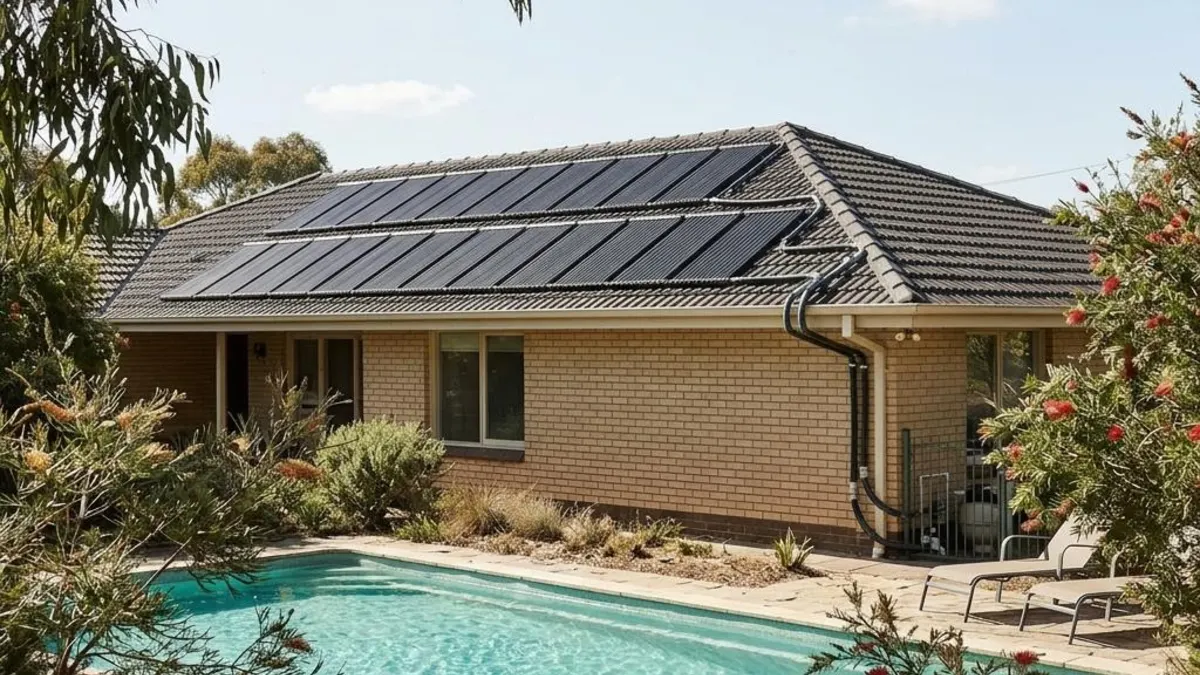
Solar pool heating circulates water through roof collectors and can offer low running costs, but useful heat depends on the weather and a suitable roof. A heat pump moves heat from the air into the water, within its published operating range. Choose around your roof, climate, cover habits and how much of the cooler season you want to swim through.
In this guide
The short comparison
| Solar pool heating | Heat pump | |
|---|---|---|
| Heats by | Circulating pool water through roof collectors | Moving heat from outdoor air into the water |
| When it adds heat | When the collectors can gain useful heat; a temperature-sensing controller manages this | When scheduled to run, within the model’s operating range and with adequate water flow |
| Space needed | A suitable roof with enough unshaded collector area | A firm base with clear intake and exhaust airflow |
| Cool or cloudy weather | Less useful heat is available | Output and efficiency generally fall as air cools |
| Running cost | Mainly the electricity needed for pumping; site design matters | Electricity use depends on heat demand and real operating efficiency |
| Temperature control | The weather limits what is achievable | A chosen target, provided sizing, conditions and heat loss allow it |
What a solar system actually involves
Collector area is sized relative to the pool surface, the roof’s orientation and the season you want. A long swimming season or a shaded roof needs a different assessment from a sunny roof used mainly in summer. Ask a solar specialist to calculate the collector area for your site rather than treating one percentage as a universal rule.
Water has to travel up to the roof and back, at the flow rate the system needs. Some installations use a dedicated solar pump. A temperature-sensing controller is important: circulating water through collectors when they are colder than the pool can cool the water rather than warm it.
Solar heat is not completely free heat. There is equipment, installation, maintenance and pumping electricity, as well as a ceiling set by the weather and your roof.
What a heat pump actually involves
A heat pump does not need direct sunshine. It can operate in sun or cloud, by day or night, provided air temperature, water flow and other conditions are within the manufacturer’s limits and local noise rules permit operation.
Cold-weather capacity matters more than the biggest brochure number. The same model can deliver substantially less heat in cool air than in warm-air test conditions. Compare published output, COP and defrost requirements at temperatures relevant to the months you intend to swim.
The roof question
Roof suitability can decide the solar question before running costs do. Consider usable area, orientation, shade, condition, access for servicing and any owners corporation or approval requirements. Roof collectors may also compete with solar electricity panels for space.
A heat pump does not need collector space on the roof, but it does need power, suitable plumbing, drainage and a location with free airflow. Neither option is a box you can place anywhere.
Three common scenarios
- A big, sunny roof and a mainly warmer-month swimming season: solar heating may suit, with a cover helping retain heat overnight.
- No suitable roof, a cool climate or a preference for a chosen temperature through the shoulder months: investigate a heat pump sized for the coldest intended swimming month.
- A suitable roof and a longer season: some pools combine solar heating with a heat pump for top-ups. Controls and economics need a site-specific design.
Gather before you decide
- Usable roof area, direction, condition and shading through the day
- Pool surface area and volume, target temperature and actual swimming months
- Power available at the equipment pad, plus space for airflow and access
- Your cover type and how consistently you will use it
Worth professional confirmation
Have a solar specialist assess the collectors, roof and hydraulics, or a heat-pump specialist assess cold-month capacity and installation requirements. Our sizing tool estimates heat-pump needs; it does not design a roof collector system or calculate a combined system’s savings.
Sources & further reading
Technical references and general background reading. Wikipedia links explain the underlying concepts; they are not installation instructions or Australian compliance advice. Check the current installation manual for your exact model and the rules at your address. Manufacturer examples are not stock or performance recommendations.
- Wikipedia — Heat pump (background reading) (opens in a new tab)
- Wikipedia — Solar water heating (background reading) (opens in a new tab)
- SPASA — solar pool heating: collectors, siting and controls (opens in a new tab)
- Australian Government — outdoor living, pools and spas (opens in a new tab)
- Example manufacturer specifications — Madimack inverEclipse (not a stock recommendation) (opens in a new tab)
Keep reading
General guidance from The Pool Heating Chick. It is not a substitute for advice about your specific site.