
Gas pool heating
When you want warm water, and you want it this afternoon.
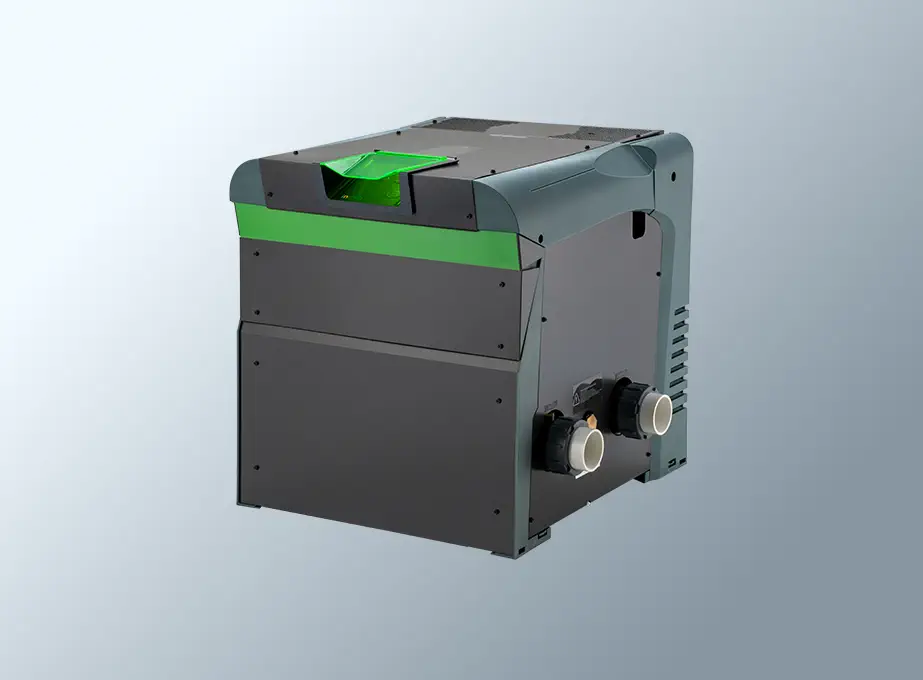
Gas heaters burn natural gas or LPG to heat water passing through them. They do not rely on air temperature, so they can lift a pool or spa quickly, which suits occasional use and spa spill-overs.
A good fit when
- You swim occasionally and want to heat on demand rather than keep the pool warm
- You have a spa that needs to come up to temperature fast
- Cold-air performance matters to you, such as winter weekend use
- A natural gas connection is already available, or LPG is practical
Worth thinking about
- Running costs per unit of heat are typically higher than a heat pump, so long seasons add up
- Gas supply sizing, meter capacity and flue clearances need a licensed gasfitter
- LPG pricing and delivery logistics differ from mains gas
- Pairing with a cover still makes a big difference to how often it fires
How it works
What happens inside the box
- 01
Water in
Filtered pool water enters the heater's heat exchanger.
- 02
Burner fires
Gas burns beneath the exchanger when heating is called for.
- 03
Fast lift
Heat transfers directly to the water regardless of air temperature.
- 04
Off again
Once at set point, the burner switches off until needed.
Questions
The ones people ask Belinda most.

Faster than a comparable heat pump in most conditions, because output does not depend on air temperature. The exact time depends on heater output, pool volume, starting temperature and weather.
Some owners run a heat pump for base heating and gas for quick boosts or a spa. It adds equipment and complexity, so it is worth talking through before deciding.
Yes. Gas connections and flue requirements in Australia must be handled by a licensed gasfitter. Belinda can discuss options, but does not perform gas work.
The current tool sizes heat pumps from a spreadsheet catalogue. Its heat-loss and warm-up figures are still a useful starting point, and Belinda can review gas sizing personally.
Keep reading
Related advice
Heat pump or gas: which suits how you swim?
The honest answer depends on how often you swim, not which technology is newer.
What does it cost to heat a pool?
Why a single number is never right, and what actually moves the cost.
Melbourne, Sydney, Brisbane: three very different pool seasons
Same country, different heating questions.
Work out what your pool needs.
Pool size, location and swim months in. Heater output, warm-up time and running cost out, with every assumption shown.