
Electric heat pumps
Steady warmth, sipping power from the air.
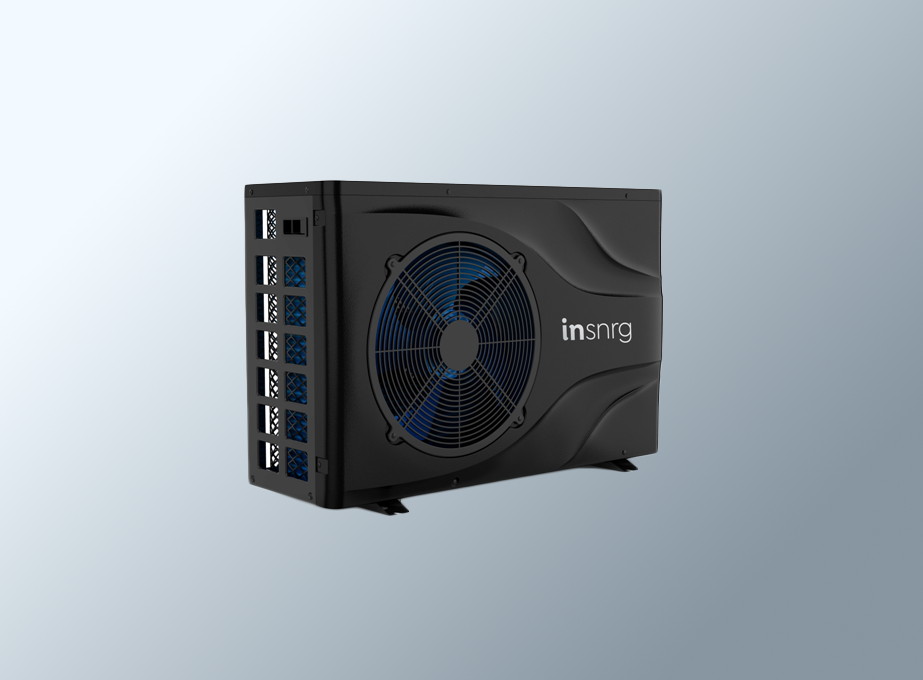
A good fit when
- You want to swim across spring, summer and autumn, not just on the hottest weekends
- You are happy to keep the pool at temperature rather than heating from cold each time
- You have, or can arrange, a suitable electrical supply near the equipment pad
- You want running costs you can plan around, especially paired with a cover
Worth thinking about
- Output falls as air temperature drops, so a cool-climate rating matters more than the headline number
- Single-phase or three-phase supply affects which models suit your property
- Warm-up from cold is measured in days, not hours, for most domestic pools
- Placement needs airflow and some thought about neighbours and noise
How it works
What happens inside the box
- 01
Air in
A fan draws outdoor air across an evaporator coil.
- 02
Heat gathered
Refrigerant absorbs that heat and a compressor raises its temperature.
- 03
Into the water
A heat exchanger passes the heat to pool water from your filtration line.
- 04
Kept steady
The controller maintains your set point while the pump runs.
Brands we sell
Heating from Insnrg and Oasis
Belinda matches the model to your pool. Stock, pricing, freight and warranty are confirmed in your written quote.


Questions
The ones people ask Belinda most.

Keep reading
Related advice
Heat pump or gas: which suits how you swim?
The honest answer depends on how often you swim, not which technology is newer.
How long does it take to warm a pool?
Warm-up is a volume problem first and a heater problem second.
How to size a pool heater properly
Bigger is not always better, but too small is always disappointing.
Work out what your pool needs.
Pool size, location and swim months in. Heater output, warm-up time and running cost out, with every assumption shown.