
Advice · 5 min read
Do pool heat pumps need three-phase power?

Written by Belinda
- Last updated:
- Awaiting confirmation
The short answer
Some pool heat pumps need three-phase power and many do not. There is no universal heating-capacity cutoff where single-phase stops being enough. Check the exact model’s supply type, current draw and connection requirements, then ask a licensed electrician whether your property can safely support it. Size the pool first, shortlist models, and confirm the electrical side before buying.
In this guide
Single-phase and three-phase, in plain English
Homes may have a single-phase or three-phase electrical supply. Three-phase can support larger total electrical loads, but the available capacity and suitability of a particular property need to be assessed, not guessed.
Ask a licensed electrician to identify your supply and spare capacity. Do not open switchboard covers, touch electrical components or attempt to work this out by inspecting wiring yourself.
It is model-specific, not size-based
“Big heater means three-phase” is not a reliable buying rule. Some ranges include relatively large single-phase models; other models require three-phase. Even similarly named units can have different connections.
Use the current electrical specifications, installation instructions and nameplate for the exact model. A single-phase supply does not automatically mean an existing power point is suitable: a dedicated circuit, hard-wired connection or other work may still be required.
Heating output in kW is not the same as electrical input in kW. A heat pump moves heat, so do not size the electrical supply from the advertised heating output.
What an electrician actually checks
- Supply type, total capacity and the effect of other large household loads
- The model’s electrical input, maximum current and starting characteristics
- The required circuit, cabling, isolation and protective devices
- Whether the connection is plug-in or hard-wired and what work is required
- Applicable state requirements, installation standards and network constraints
A useful preparation step
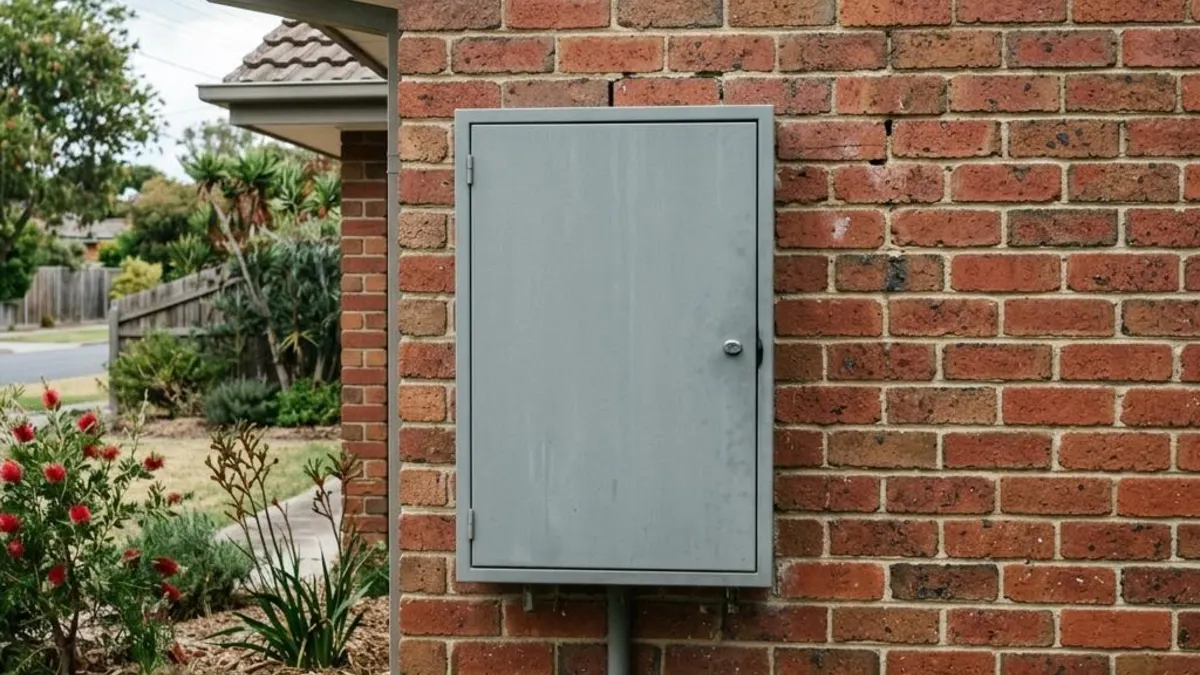
Collect the model’s specification sheet and, if safe to do so, take external photos of the closed switchboard and meter for your electrician. Do not remove covers or touch anything. Let the electrician decide whether a site visit or more information is needed.
Electrical wiring work needs the appropriate licence. The NSW Government guidance linked below explains the requirements in NSW; other states and territories have their own rules.
If the ideal heater exceeds your supply
Options may include a different suitable model, realistic cover and usage changes that reduce the heating job, or an electrical upgrade. Compare these using both the sizing result and the electrician’s assessment.
Do not choose a heater that cannot meet the pool’s needs just because it fits the existing circuit. Equally, do not assume an upgrade is needed before a professional has checked the options.
What three-phase does not change
Three-phase is not, on its own, a promise of cheaper heat. Running cost depends on electricity pricing and the equipment’s real efficiency under operating conditions. Supply type is about supporting the chosen model safely.
Gather before you decide
- Your pool sizing result and the months you want to swim
- The exact model’s current electrical and installation specifications
- External photos of the closed switchboard and meter, if safely accessible
- A licensed electrician’s assessment before committing to the equipment
Sources & further reading
Technical references and general background reading. Wikipedia links explain the underlying concepts; they are not installation instructions or Australian compliance advice. Check the current installation manual for your exact model and the rules at your address. Manufacturer examples are not stock or performance recommendations.
- Wikipedia — Single-phase electric power (background reading) (opens in a new tab)
- Wikipedia — Three-phase electric power (background reading) (opens in a new tab)
- Example manufacturer specifications — Madimack inverEclipse (not a stock recommendation) (opens in a new tab)
- NSW Government — electrical work and licensing (opens in a new tab)
Keep reading
General guidance from The Pool Heating Chick. It is not a substitute for advice about your specific site.