
Advice · 6 min read
Where to put a pool heat pump: noise, airflow and placement

Written by Belinda
- Last updated:
- Awaiting confirmation
The short answer
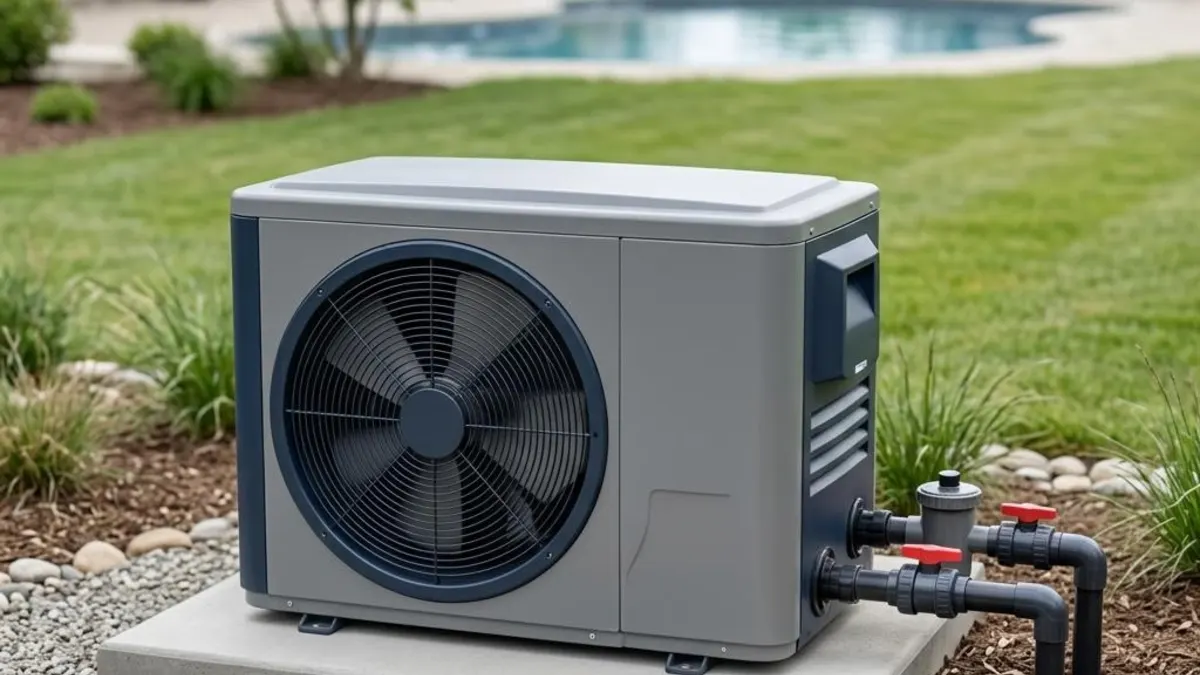
A heat pump needs free-flowing air, an appropriate firm base, drainage for condensate and space for servicing. Follow the exact model’s installation clearances and check local noise requirements, particularly near bedrooms and boundaries. A site assessment before purchase is much easier than trying to solve a poor location after the unit arrives.
In this guide
Air in, air out
The intake and exhaust need the clearances in the manufacturer’s installation manual. Treat the site as a whole: a wall, fence, deck or screen can affect how air moves even when a single clearance measurement looks adequate.
Avoid recirculation, where cold exhaust air returns straight to the intake. A boxed-in unit or a poorly designed screen can reduce useful heating performance. Do not build an enclosure or acoustic screen without checking that airflow and service access remain suitable.
Noise, honestly
A heat pump has a fan and compressor, so it makes sound while operating. Model, running speed, installation, vibration and the surrounding surfaces affect what people hear.
Only compare published noise ratings measured on the same basis. Distance, operating mode and whether a number is sound pressure or sound power matter. A low-speed test figure is not a promise of the same noise while the unit works hard.
Noise rules vary by state and council and may restrict operation when equipment can be heard in a neighbour’s habitable room. The Victorian council guidance below is an example, not a national rule. Confirm the current rules for your address before choosing a position or an early-morning or overnight schedule.
Water and power
A heat pump only heats when there is adequate water flow. Follow the model’s required flow range and have the plumbing, filtration schedule and any bypass arrangement assessed by the installer.
Keep plumbing runs practical and plan electrical access before installation. Condensate also needs somewhere appropriate to drain. A firm, level base and suitable vibration control should follow the manufacturer’s instructions.
A placement checklist
- A suitable firm, level base designed for the unit
- Required clearances at the intake, exhaust, sides and above
- Exhaust directed away from windows and spaces where people sit
- Consideration of nearby bedrooms, boundaries and noise-sensitive neighbours
- Appropriate condensate drainage and practical plumbing runs
- Safe access for installation and later servicing
- A daily operating schedule compatible with local noise rules
Spots people regret
Under a low deck. Facing a bedroom window. Hidden behind a screen that prevents airflow. Far from the pool equipment with no sensible route for plumbing. Each can turn a straightforward installation into an avoidable compromise.
Send photos and approximate dimensions of candidate spots before ordering. A photo helps start the conversation, but does not replace the installer’s assessment.
Gather before you decide
- Photos and dimensions of candidate locations
- Distances to windows, doors, boundaries and the pool equipment
- The exact model’s installation manual and noise specifications
- Current local noise rules, confirmed with your council where needed
Worth professional confirmation
Ask the installer to assess airflow, drainage, clearances, access, plumbing and vibration. Electrical work belongs with a licensed electrician. If noise compliance is uncertain, obtain appropriate local advice before purchase rather than relying on a brochure decibel figure.
Sources & further reading
Technical references and general background reading. Wikipedia links explain the underlying concepts; they are not installation instructions or Australian compliance advice. Check the current installation manual for your exact model and the rules at your address. Manufacturer examples are not stock or performance recommendations.
- Wikipedia — Sound pressure and decibels (background reading) (opens in a new tab)
- Wikipedia — Heat pump (background reading) (opens in a new tab)
- City of Glen Eira — residential equipment noise guidance (Victoria) (opens in a new tab)
- Example manufacturer specifications — Madimack inverEclipse (not a stock recommendation) (opens in a new tab)
Keep reading
General guidance from The Pool Heating Chick. It is not a substitute for advice about your specific site.